

Automotive must be a central part of re-industrialisation
 3 mins read time
 Policy

The Institute of the Motor Industry sets out its ‘wish list’ as the UK prepares for new leadership and urges a focus on the sector that contributes £37bn to the economy
As the UK prepares for a new Prime Minister, the Institute of the Motor Industry (IMI) is calling on the incoming leader to make a clear commitment to the automotive sector. Repeatedly overlooked in government policy, the IMI wants the new Prime Minister to ensure the support is provided to enable the automotive sector to fully play its part in re-industrialisation. This includes prioritising technical and vocational skills in education policies.
The IMI's Wish List for the Next Prime Minister
As a new Prime Minister prepares to take office, the IMI is calling for the following commitments:
1. Automotive Embedded in Re-Industrialisation Strategy
The Labour Party’s 2023 pre-election commitment was for a dedicated automotive strategy that encompassed manufacturing, aftermarket, supply chain, and workforce development. That has not been evident to date. The IMI is calling for recognition that a sector employing 866,000 people and generating £37 billion in annual GVA cannot be treated as a footnote within a broader manufacturing category and should take a central role in a Re-Industrialisation Strategy.
2. Consistency on ZEV Policy
Mixed messages on EV policies including the ZEV mandate have caused employers to pause investment in training. Whatever the final mandate parameters, the government must make clear that the transition to electric vehicles is irreversible and that skills investment must accelerate accordingly.
3. Government Mandating of the IMI TechSafe Standard
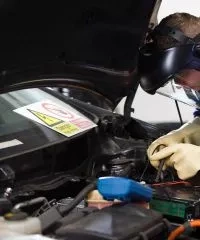
As the scope of technological development in automotive expands, the IMI is calling for government to ensure all technicians working on safety-critical aspects of vehicles on UK roads hold a recognised competence qualification, protecting both workers and motorists.
4. Apprenticeship Reform That Doesn’t Put Road Safety at Risk
The IMI has serious concerns about the current apprenticeship reforms. It is calling for a review of the reforms that maintains rigorous, independent end-point assessment, as well as protecting the depth and quality of training required to achieve real occupational competence.
5. Automotive Skills as a Pillar of Skills England
The sector's workforce needs must be explicitly named and resourced within the national skills framework, not left to be inferred from cross-sector language.
“The publication in June 2025 of the Labour Government's Modern Industrial Strategy represented a significant moment for UK industrial policy; what it did not represent was a moment for automotive,” said Nick Connor, CEO of the IMI. “In his speech on 29th June 2026 Andy Burnham clearly stated that he wanted to see re-industrialisation across the UK. Assuming he gets the keys to Number 10, we will work hard to ensure his Ministers understand the role the automotive sector and its 800,000 strong workforce must play in that goal.
“We are also encouraged by his commitment to technical and vocational skills. But we need an apprenticeship system that is fit for purpose to support and encourage young people to ensure that the sector has the skilled workforce for the future.
“Clearly the country needs stability right now to give businesses and consumers confidence for the future. We look forward to working with the new Prime Minister and his Ministers to ensure the automotive sector can play its part fully in supporting that confidence.”
Find out more on our policy page.

The IMI
Share this Page