


IMI analysis reveals strong talent pipeline for HGV technicians
 3 mins read time
 Career Development

HGV technician apprenticeship starts rise 47% since 2020/21 with heavy reliance on older trainees and ASA levy funding
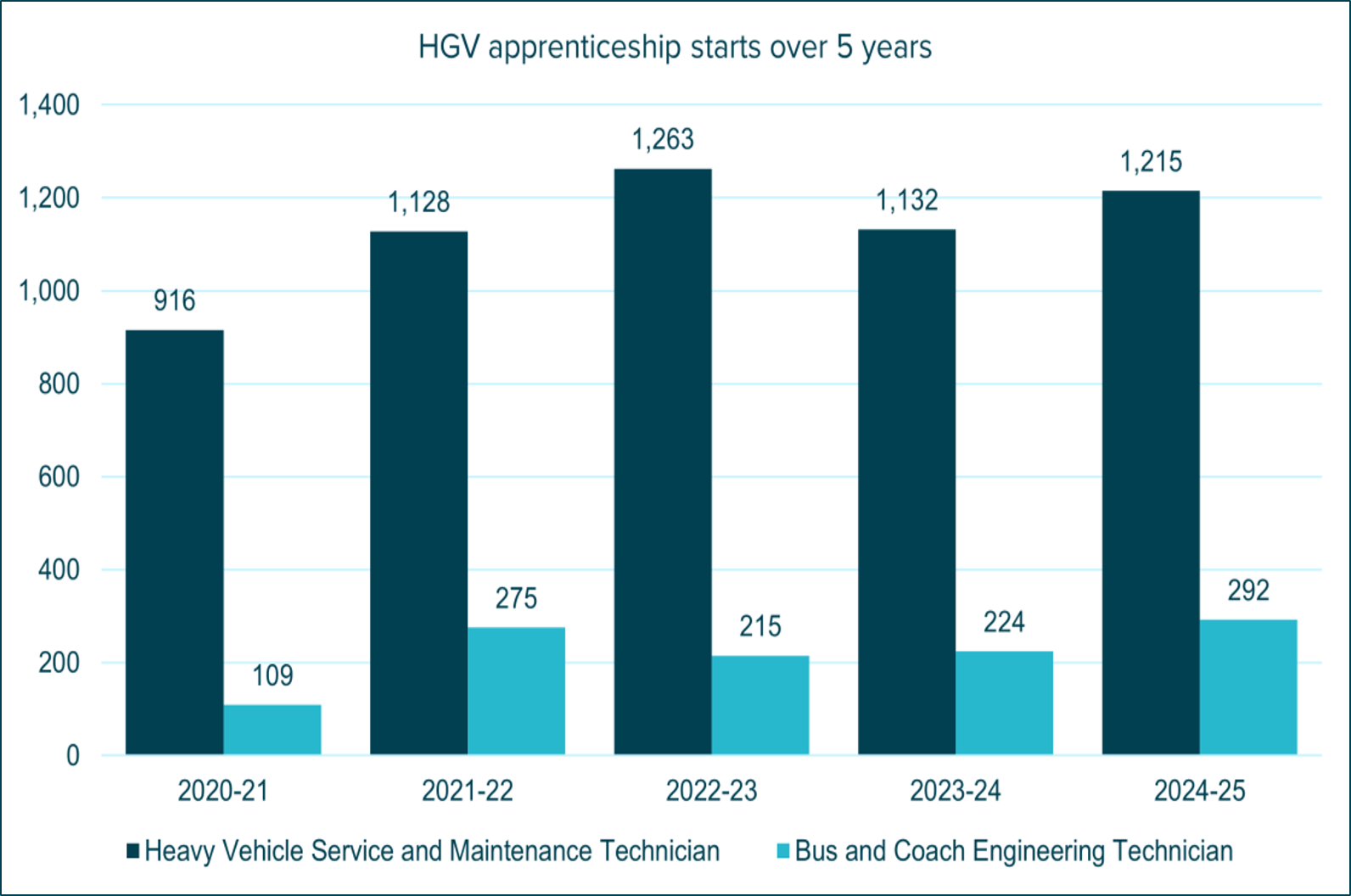
With increasing government focus on public transport and the growing e-commerce marketplace, the latest analysis from the Institute of the Motor Industry (IMI) paints a positive picture for the HGV technician talent pipeline. Analysis of data from the Department for Education (DfE) and the Department for Work and Pensions (DWP)¹ reveals an encouraging increase in the number of apprentices joining HGV pathways. More than 1,500 learners started HGV apprenticeships in the 2024/25 academic year, with 80.6% of these on the Heavy Vehicle Service and Maintenance Technician pathway.
Key insights:
- Total HGV pathways starts reached 1,507 in 2024/25, an increase of +1.8% year-on-year
- Bus and Coach Engineering Technician apprenticeships shows the strongest recent growth, increasing by +30.4% year-on-year to 292 starts
- Over five years, starts have increased by 47%, rising from a pandemic low in 2020/2021 to a peak in 2024/2025
- HGV pathways have a higher proportion of over 25s compared to the wider automotive sector, indicating a stronger reliance on those already with experience
- ASA levy funding drives the HGV engineering pipeline, supporting the majority of starts across both pathways
“Our latest analysis shows steady growth in HGV apprenticeship starts after a sharp decline during the pandemic,” explained Nick Connor, CEO at the IMI. “HGV apprenticeship starts are now at the highest level for the last five years.
“In particular, it is interesting to see a shift in demand, with Bus and Coach Engineering Technician apprenticeships now the fastest growing pathway. This is likely to be driven by investment in public transport as well as fleet changes and the transition to zero-emission vehicles for the growing e-commerce marketplace.”
With the IMI analysis also identifying that HGV apprenticeship pathways attract a higher percentage of older learners over 25 compared to the wider automotive sector, this presents both an opportunity and a risk for HGV operators. Whilst there are clear career change and development opportunities for those with existing experience, the reliance on older workers risks less focus on attracting new entrants.
“The current reliance on older than average trainees, together with the high proportion of ASA levy funding, means the security of adult learners and therefore the HGV workforce supply is sensitive to policy or funding changes,” added Nick Connor. “This highlights the need to support flexible training routes and protect adult learner funding to sustaining growth and meet future HGV workforce needs.”

The IMI
Share this Page