


ADAS TechSafe Technician Forecast - Q4 2025
 3 minute read time
 Skills
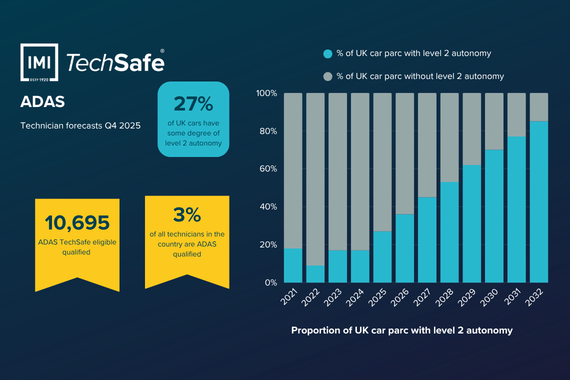
ADAS-qualified technician numbers continue to grow, but the workforce gap could exceed 190,000 by 2035
Each quarter, we publish the ADAS TechSafe Technician Forecast to monitor growth across the UK's ADAS-qualified workforce and assess whether training levels are keeping pace with future demand.
This update reviews certification activity from 2025 and refreshes our workforce forecasts through to 2035.
Although more technicians continue to gain ADAS qualifications, growth is not keeping pace with the increasing number of ADAS-equipped vehicles entering the UK car parc. As a result, the gap between future demand and workforce readiness continues to widen.
ADAS TechSafe Technician Forecast: Q4 2025 at a glance
- 10,695 technicians hold an ADAS qualification
- Around 3% of the UK technician workforce is ADAS qualified
- We expect approximately 2,421 new certifications in 2026
- Around 85% of the UK car parc could have Level 2 autonomy by 2032
- The ADAS-equipped vehicle parc may need more than 220,000 ADAS-qualified technicians by 2032
- The projected workforce shortfall could exceed 190,000 technicians by 2035
Q4 2025 certification results
Awarding bodies and eligible IMI accreditations added 2,021 ADAS-qualified technicians during 2025.
As a result, the total number of qualified ADAS technicians stands at 10,695. While certification levels continue to rise, forecasts suggest demand is increasing much faster.
Early outlook for 2026
Trends suggest that 2,421 technicians could gain ADAS certification during 2026. If achieved, the total number of ADAS-qualified technicians would rise to 13,116.
Even if certification growth continues at this rate, technician supply is unlikely to keep pace with demand created by the expanding ADAS-equipped vehicle parc.
The chart below illustrates the widening gap between projected technician demand and certification levels as more vehicles enter the UK parc with Level 2 autonomous capability.
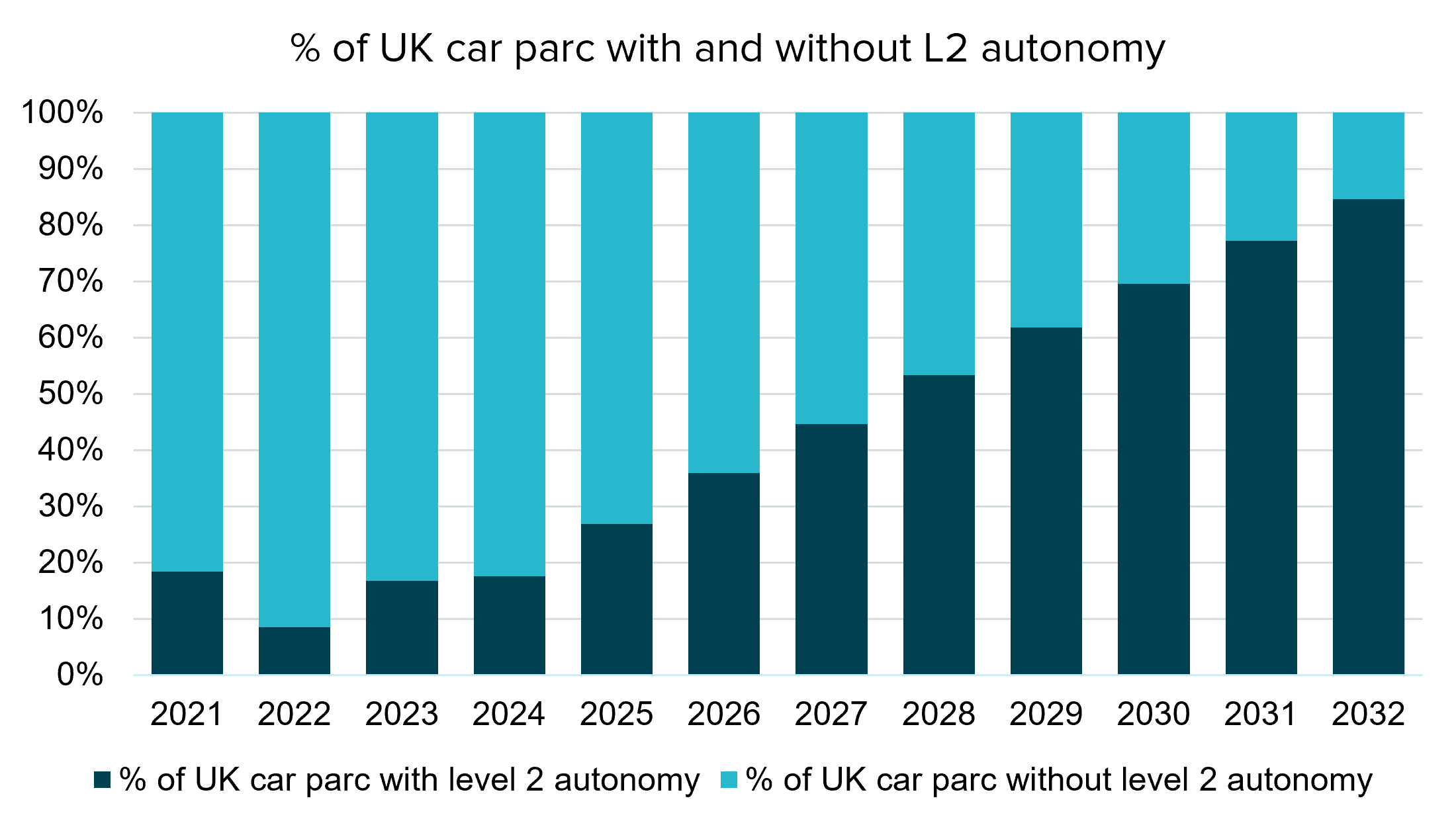
By 2032, around 32.4 million vehicles, equivalent to approximately 85% of the UK car parc, could feature some degree of Level 2 autonomy.
Looking ahead to 2035
Our forecasts show continued growth in ADAS certification over the next decade, with the number of ADAS-qualified technicians projected to reach around 34,500 by 2032 and almost 50,000 by 2035.
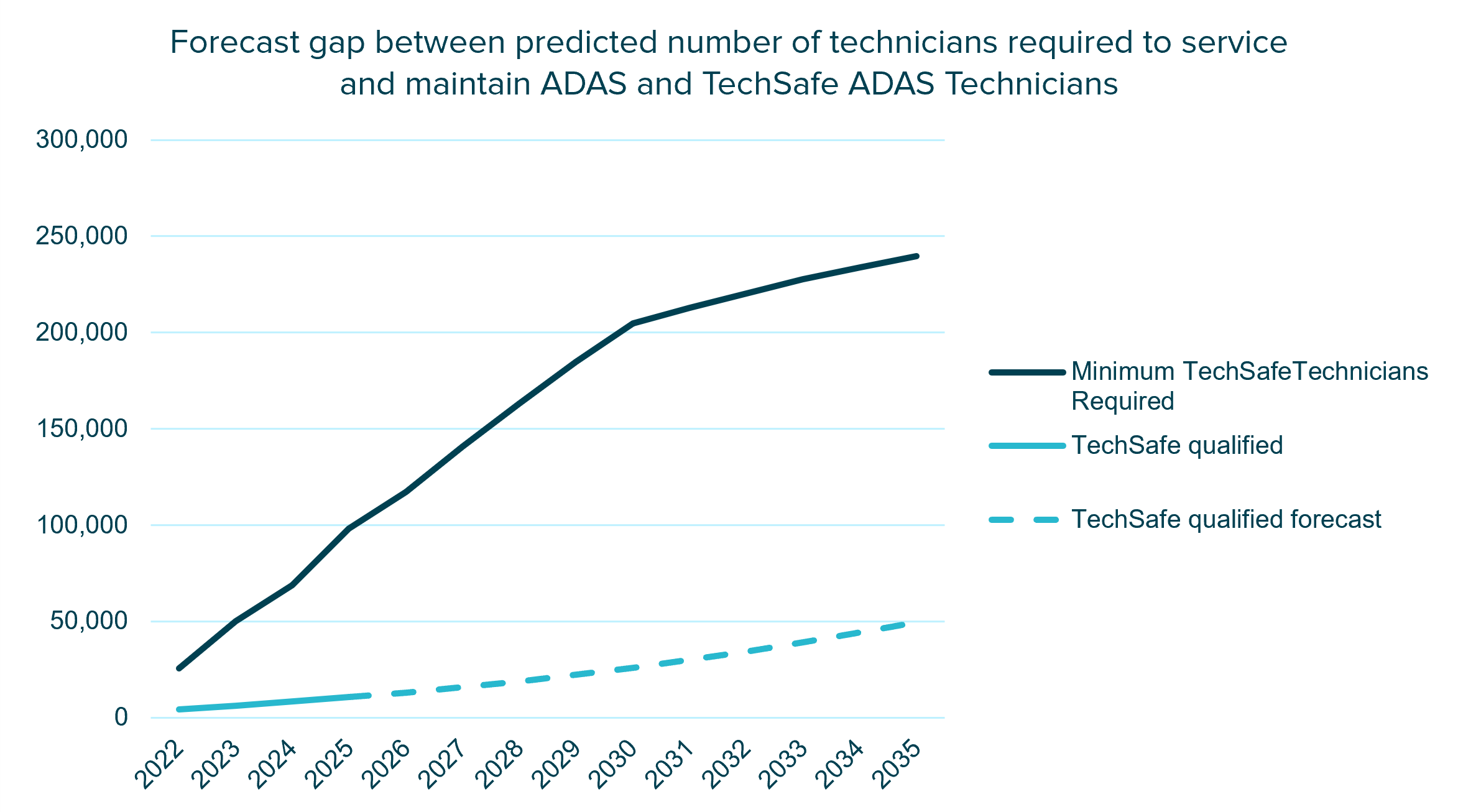
Based on growth in the ADAS-equipped vehicle parc, the UK may need more than 220,000 ADAS-qualified technicians by 2032 to support inspection, calibration, maintenance and repair activity.
The forecast suggests technician demand will grow much faster than qualification levels over the next decade.
By 2035, the projected shortfall exceeds 190,000 technicians.
The findings mirror those in our EV TechSafe Technician Forecast, which also identified a widening gap between technician supply and future demand. Together, the reports suggest that training uptake must accelerate across emerging vehicle technologies if the automotive sector is to keep pace.
This suggests that steady growth in certification alone will not fully meet future workforce needs. Without a faster increase in training uptake, technician availability could become a constraint on the servicing and repair of ADAS-equipped vehicles.
The challenge is no longer technician growth. It is whether growth is happening quickly enough.
What this means for the industry
The number of vehicles equipped with advanced driver assistance systems is expected to increase rapidly over the next decade.
This creates a limited window for employers, training providers and technicians to build the skills needed to inspect, calibrate and repair these systems. Delays become harder to recover as the ADAS-equipped vehicle parc continues to grow.
The challenge is no longer whether ADAS technician numbers are growing. The challenge is whether training uptake can accelerate quickly enough to support the next generation of vehicles entering the UK car parc.
Data sources
Certification estimates use Vocational Qualification Dataset published by Ofqual and eligible IMI accreditation data.
Author: Angela Barnard, Research and Insights Analyst.


The IMI
Share this Page