


Vacancy Tracker - June 2026
 4 minute read time
 Labour Market
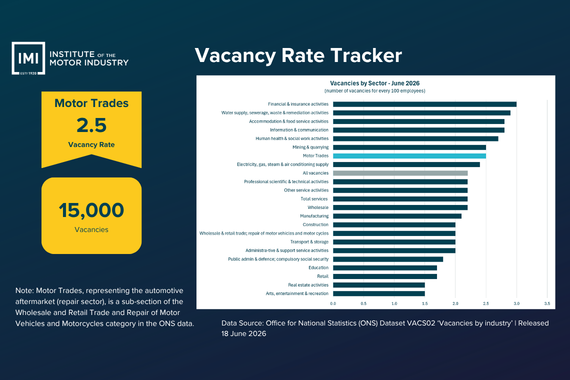
Motor trade vacancies rise to 15,000 as recruitment demand strengthens
Motor trade vacancies increased by 7% during May, lifting the sector back into the top six UK industries for vacancy rates.
This Vacancy Tracker explores where employers are recruiting, which skills are most in demand, and what the latest vacancy trends mean for the automotive workforce.
At a glance
- Vacancy rate: 2.5
- UK industry rank: 6 out of 23
- Approximate open positions: 15,000
- Year-on-year change: -12%
- Two-year change: -25%
Key insight
Employers stepped up recruitment compared with the previous period, although vacancies remain below levels recorded one and two years ago.
The latest data shows that employers continue to invest in critical technical capability despite wider labour market uncertainty.
Vacancy levels show renewed activity
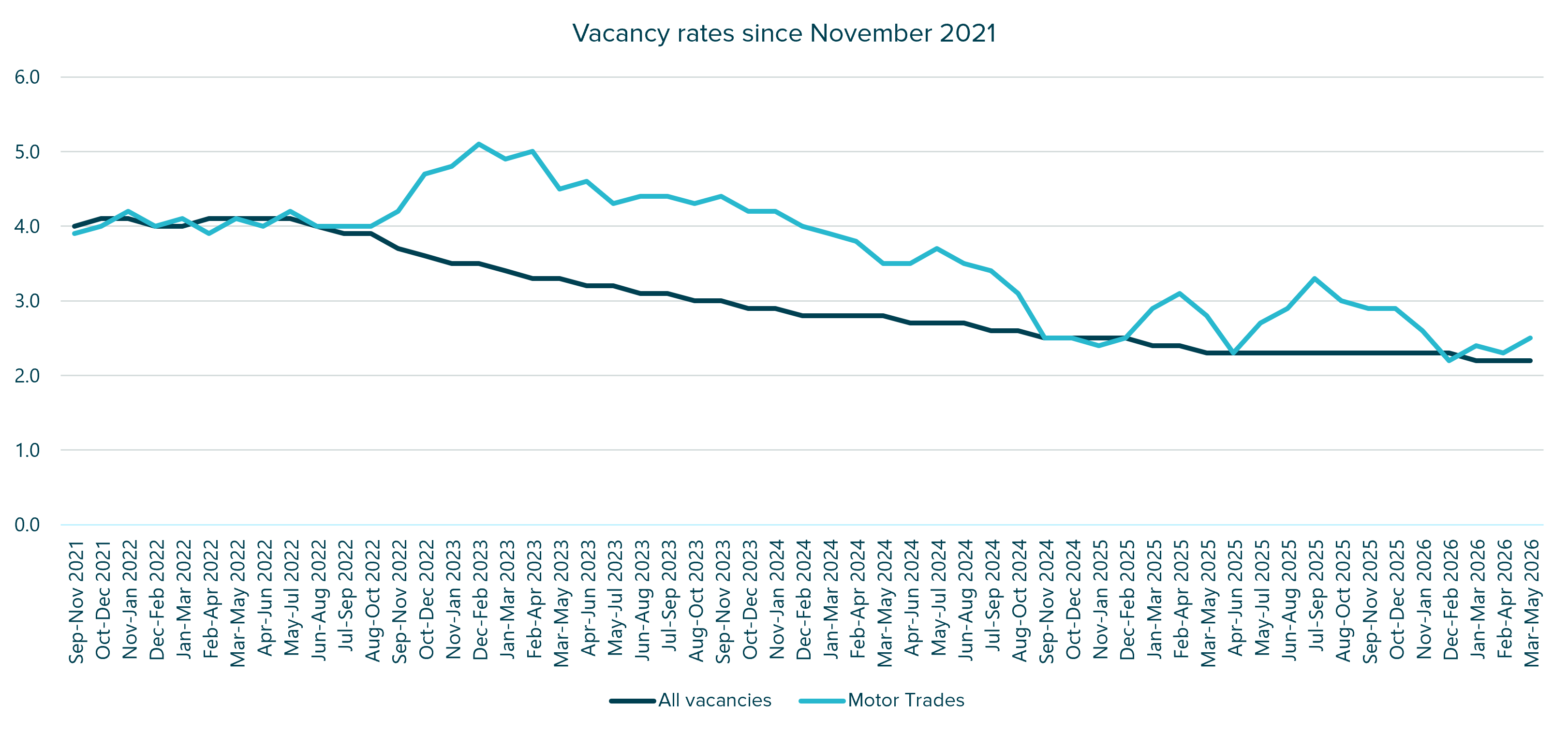
Motor trade vacancies increased to 15,000 during the latest reporting period, while the vacancy rate rose from 2.3 to 2.5 vacancies per 100 employee jobs.
Employers recruited more actively than in the previous period. However, vacancy levels remain 12% lower than a year ago and 25% below levels recorded two years ago.
The latest figures point to a gradual recovery in recruitment demand rather than a return to previous highs.
Motor Trades climb back into the top six
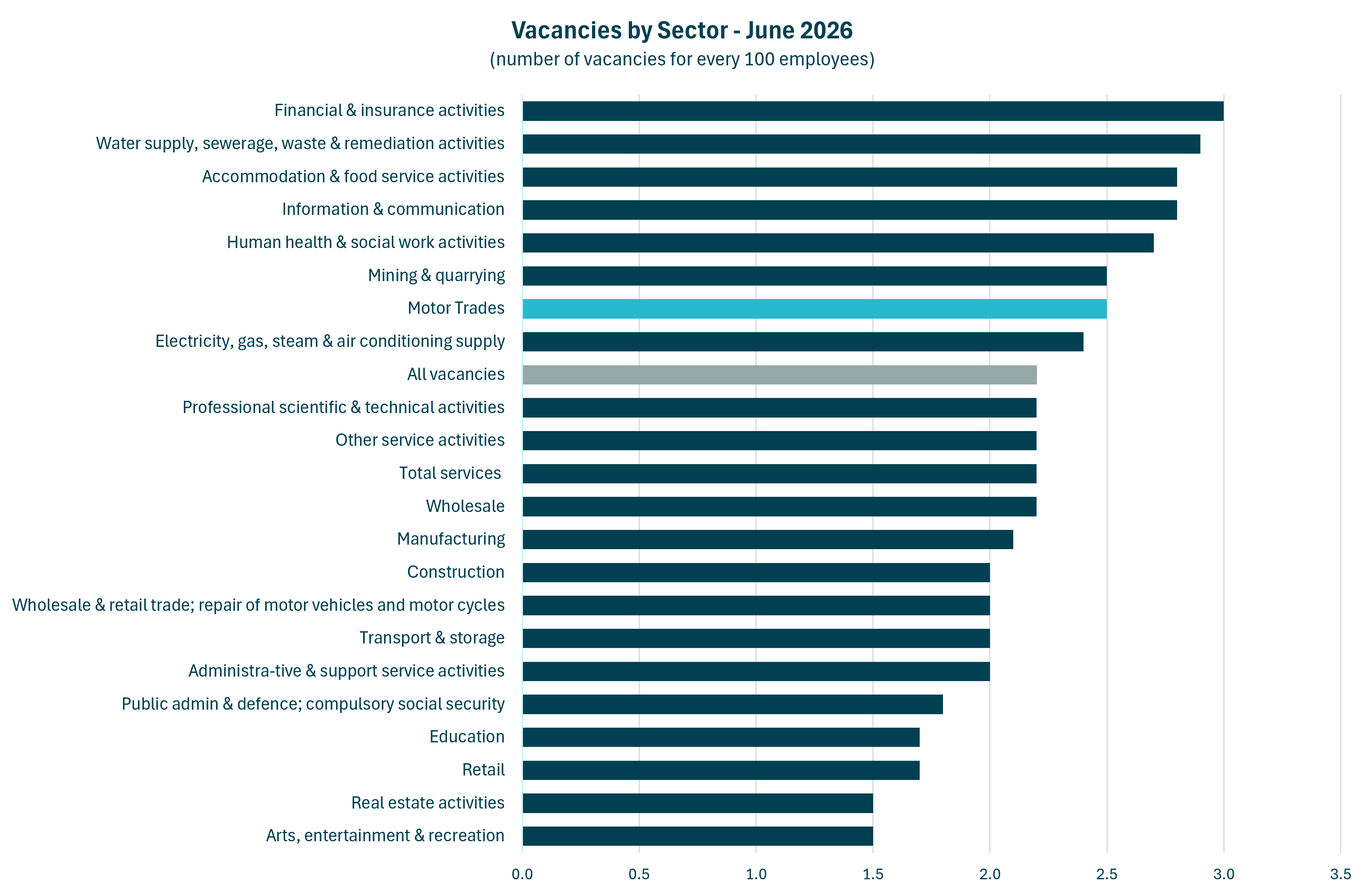
Motor Trades recorded 2.5 vacancies per 100 employees, ranking sixth out of 23 UK industries.
The sectors with the highest vacancy rates were:
Financial & insurance activities
Water supply, sewerage, waste & remediation activities
- Accommodation & food service activities.
Automotive employers continue to compete more actively for skilled workers than many other sectors, despite vacancy levels remaining below previous years.
Motor Trades climbed back into the UK's top six industries for vacancy demand, highlighting continued competition for skilled automotive talent.
Technical recruitment continues to drive hiring
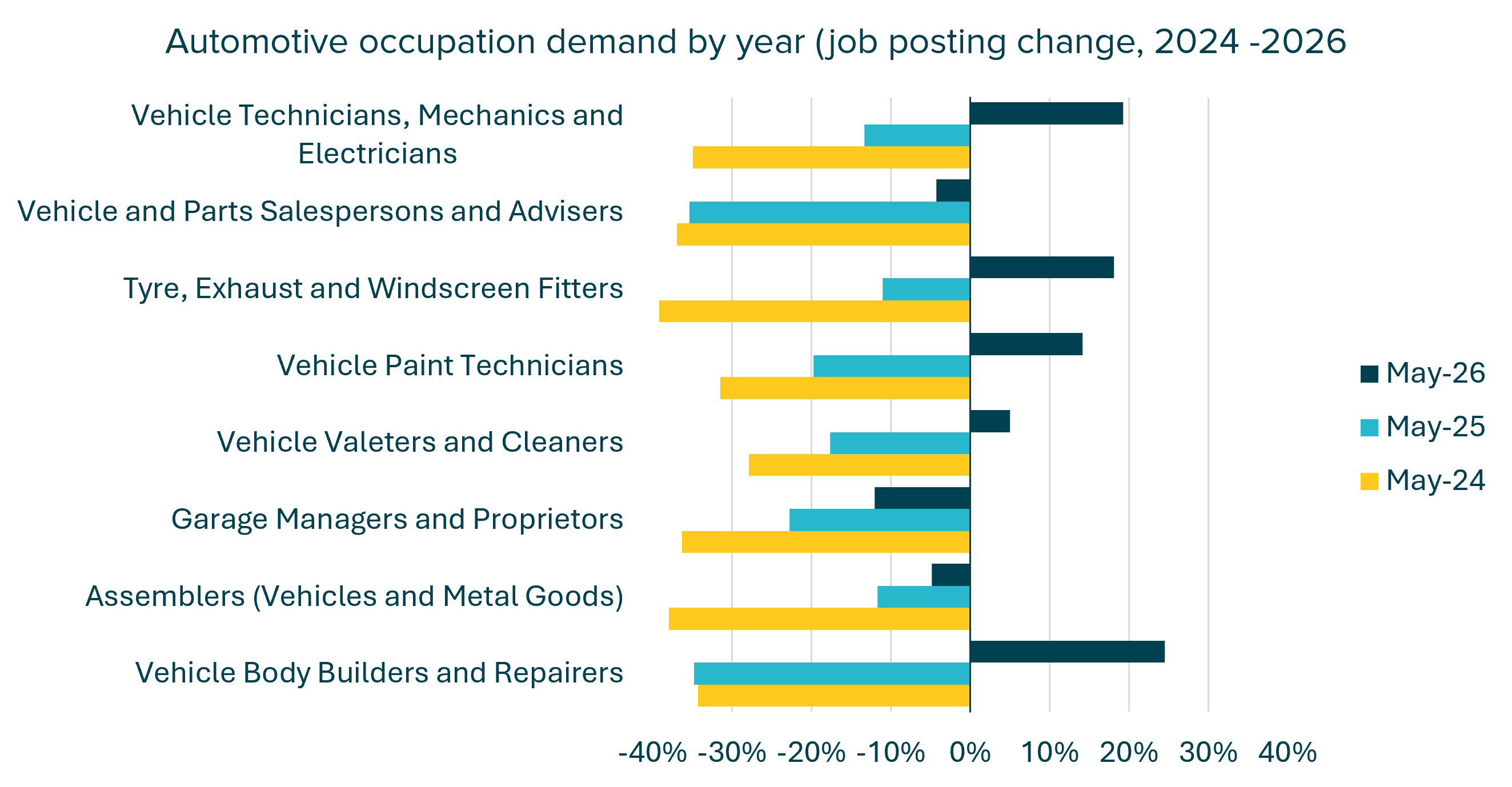
Online job postings increased during the latest reporting period.
Employers advertised almost three quarters (72%) of all vacancies for Vehicle Technicians, Mechanics and Electricians. Demand for these roles increased by 19% year on year.
Employers also recruited strongly for HGV Technicians, which accounted for 14% of postings and increased by 11%.
Vehicle Body Builders and Repairers increased by 25%, Vehicle Paint Technicians by 14%, and Tyre, Exhaust and Windscreen Fitters by 18%.
Employers increased EV Technician recruitment by 59% year on year, reversing last year's decline and signalling renewed demand for specialist vehicle technology skills.
In contrast, employers reduced recruitment for Garage Managers and Proprietors, Assemblers, and Vehicle and Parts Salespersons and Advisers.
The pattern shows that employers continue to prioritise workshop capability while investing selectively in emerging technical skills.
Nearly three quarters of all automotive vacancies are now for Vehicle Technicians, Mechanics and Electricians.
Roles in demand and skills
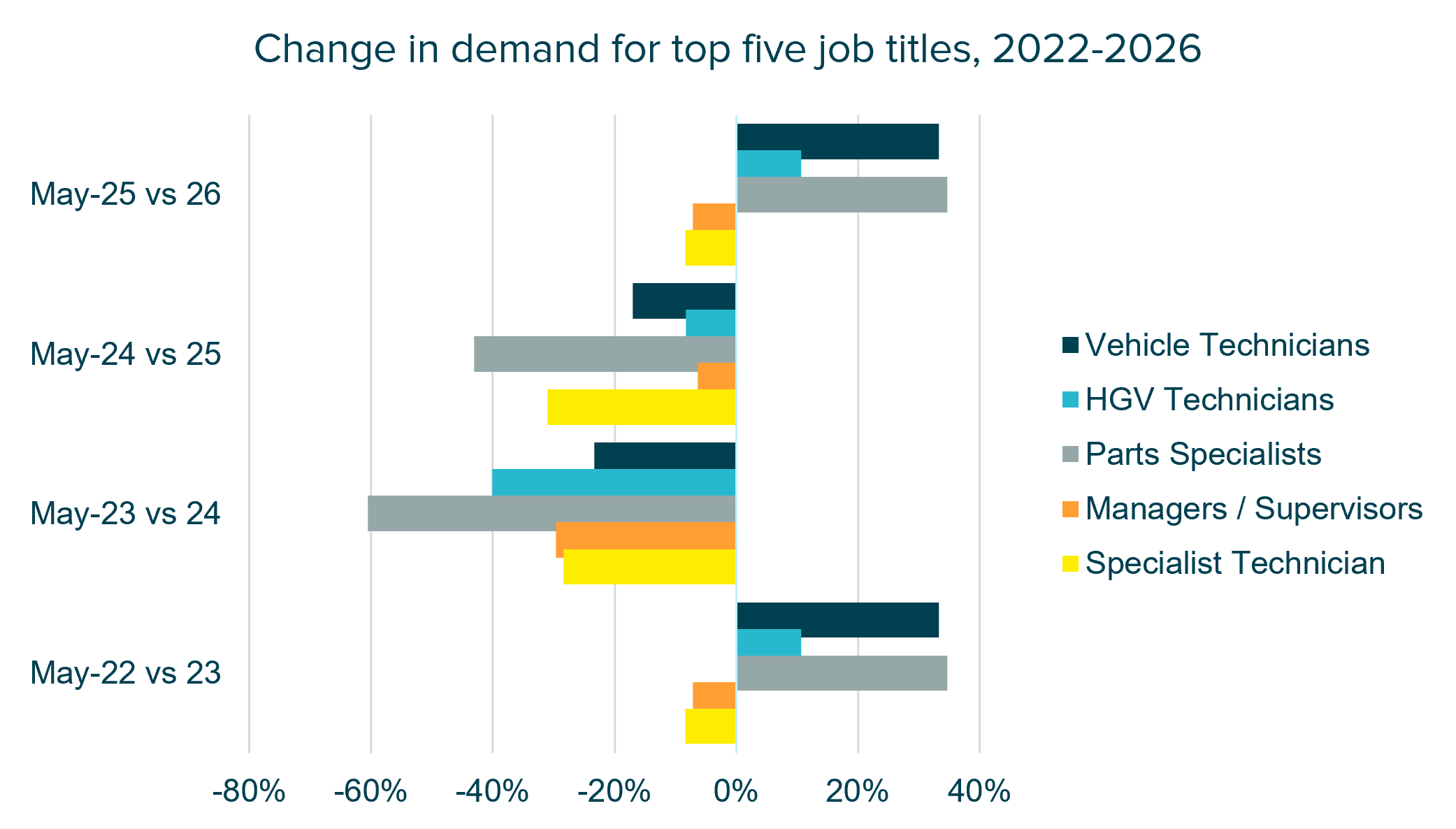
Most in-demand roles
Fastest-growing roles
| Occupation | Change Vs May 2025 |
| Motor Vehicle Technicians | +34% |
| HGV Technicians | +14% |
| arts Specialists | +7% |
| Managers / Supervisors | +6% |
| Specialist Technicians | +5% |
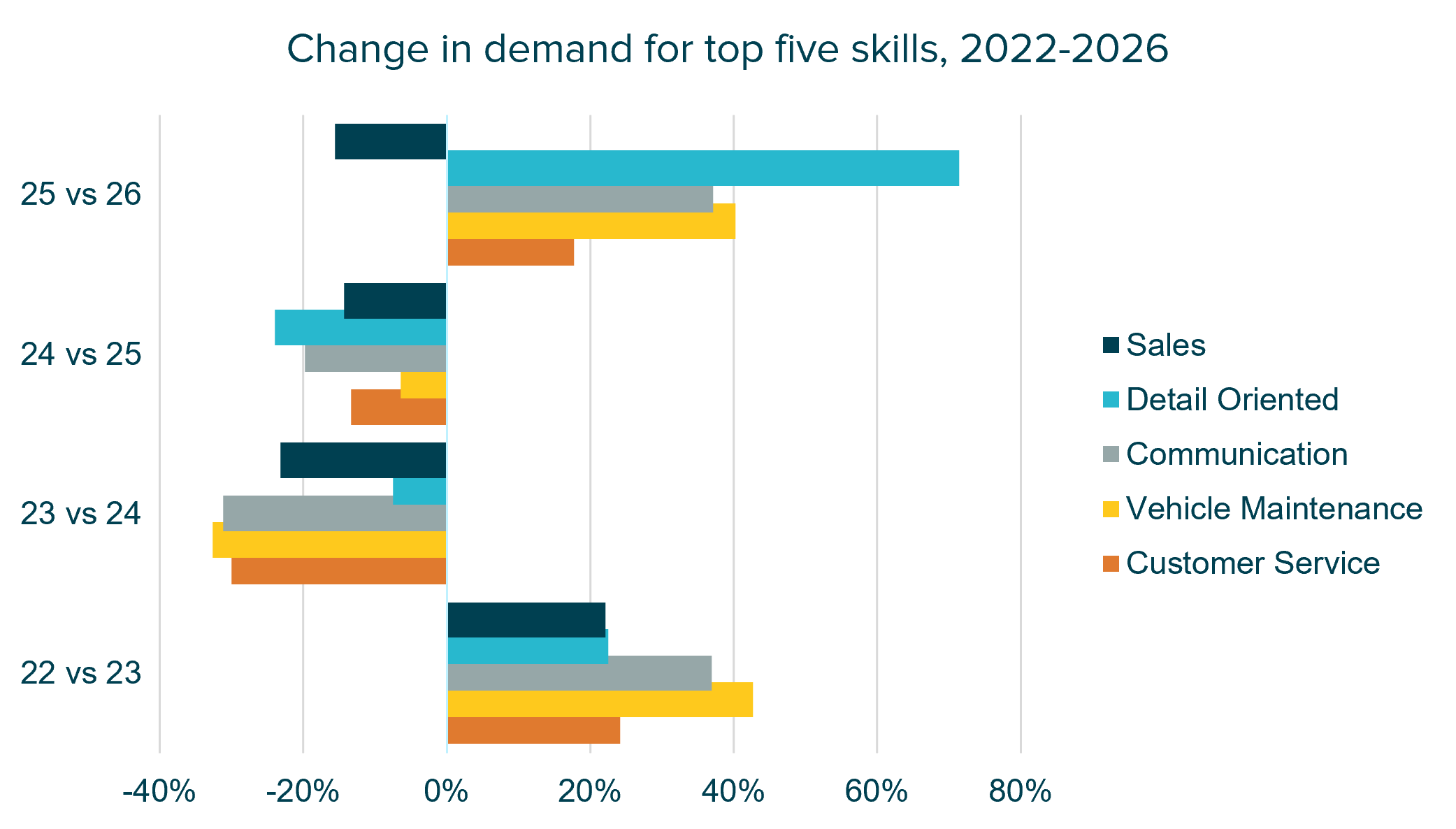
Most in-demand skills
Fastest-growing skills
| Occupation | Change Vs May 2025 |
| Influencing skills | +122% |
| Operations | +85% |
| Leadership | +83% |
| Teamwork | +80% |
| Finance | +61% |
Workforce insight
Employers continue to concentrate recruitment in technical and workshop-based occupations, with Vehicle Technicians, HGV Technicians and Specialist Technicians all recording year-on-year growth.
At the same time, employers increasingly seek broader workplace capability. Demand for influencing, operations, leadership, teamwork and finance skills all increased strongly compared with last year, showing that employers value more than technical expertise alone.
Employers continue to prioritise technical expertise while placing greater value on leadership and operational capability.
What this means for the industry
Employers strengthened recruitment during May, driven largely by demand for skilled technicians and specialist workshop roles.
The rebound in EV Technician recruitment shows that employers continue to invest in skills that support changing vehicle technologies. Growing demand for leadership and operational capability also reflects broader workforce needs.
Although vacancy levels remain below previous years, employers continue to recruit for the occupations and skills that matter most to business performance.
Overall assessment
Motor Trades returned to the top six UK industries for vacancy rates as employers strengthened recruitment during May.
Employers continue to prioritise technical capability, particularly Vehicle Technicians and EV specialists, while placing greater emphasis on leadership, operational and workplace skills.
Although vacancy levels remain below those recorded a year ago, employers continue to rebuild recruitment demand rather than return to previous hiring peaks.
Data sources
This report combines vacancy data from the Office for National Statistics (ONS) with online job advertisement data from Lightcast.
Vacancy rates represent vacancies per 100 employee jobs. Lightcast data reflects online recruitment activity and may not capture all vacancies.
Author: Angela Barnard, Research and Insights Analyst.


The IMI
Share this Page