

Automotive Education Report Edition 16
 17 minute read time
 Learners
Apprentices
| Skills
Learners
Apprentices
| Skills
This report explores trends in automotive qualifications and apprenticeships across England, Scotland, Wales and Northern Ireland. It draws on the latest available data, including apprenticeship statistics from the Department for Education (DfE).
Automotive training is recovering, but skills supply is not keeping pace with demand for EV and advanced vehicle technologies.
The latest data for 2025 shows rising qualification volumes, steady growth in EV skills and continued pressure on apprenticeship recruitment.
Q3 2025 at a glance
- 25,437 certificates issued in Q3 2025, up 12% year on year
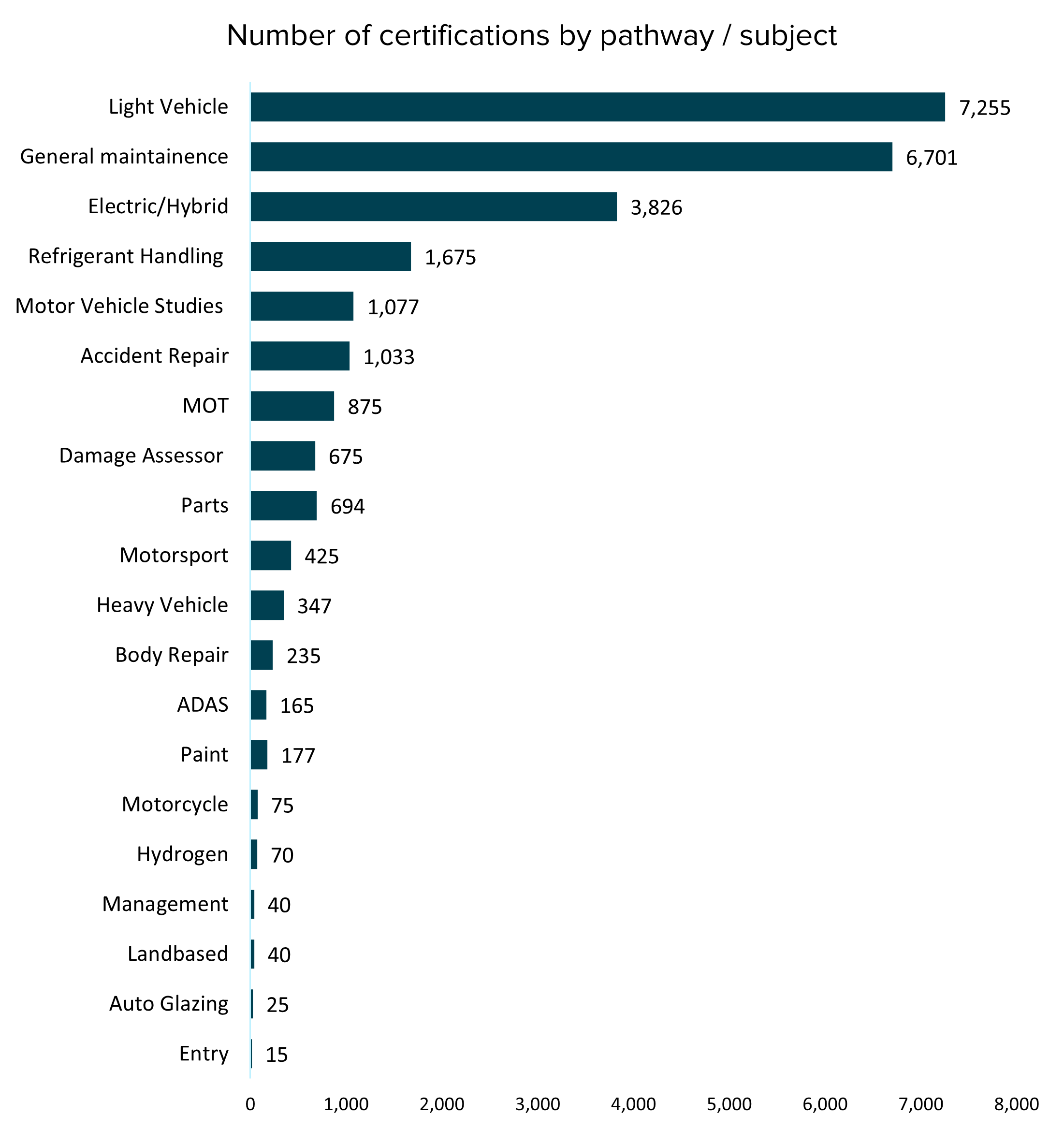
- 55% of training focused on light vehicle and general maintenance pathways
- 9% of awards from the IMI Level 1 Diploma in Automotive Maintenance
- 71,942 EV-qualified technicians, representing 26% of the workforce
- 11,518 technicians hold an ADAS qualification (4% of the workforce)
- 4,561 apprenticeship starts, down 6% year on year
- +8% growth in Autocare Technician apprenticeships, while vehicle damage pathways fall
Automotive training volumes strengthen
Training volumes have increased, with demand concentrated in core servicing pathways.
Awarding bodies issued 25,437 certificates in Q3, 76% higher than the previous quarter and 12% higher than last year.
Certificate volumes have fluctuated in recent years. The latest data shows stronger and more stable demand for automotive training than in other sectors.
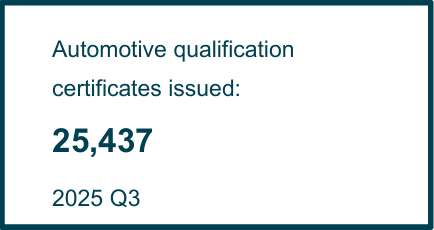
Level 2 qualifications account for 38% of certificates, while Level 3 accounts for 26%. The top ten qualifications make up 50% of all certificates, showing a gradual shift towards a broader range of training pathways.
Light vehicle and general maintenance dominate training, accounting for 55% of certificates.
EV and ADAS skills expand, but gaps remain
Demand for EV and ADAS skills is rising faster than training supply.
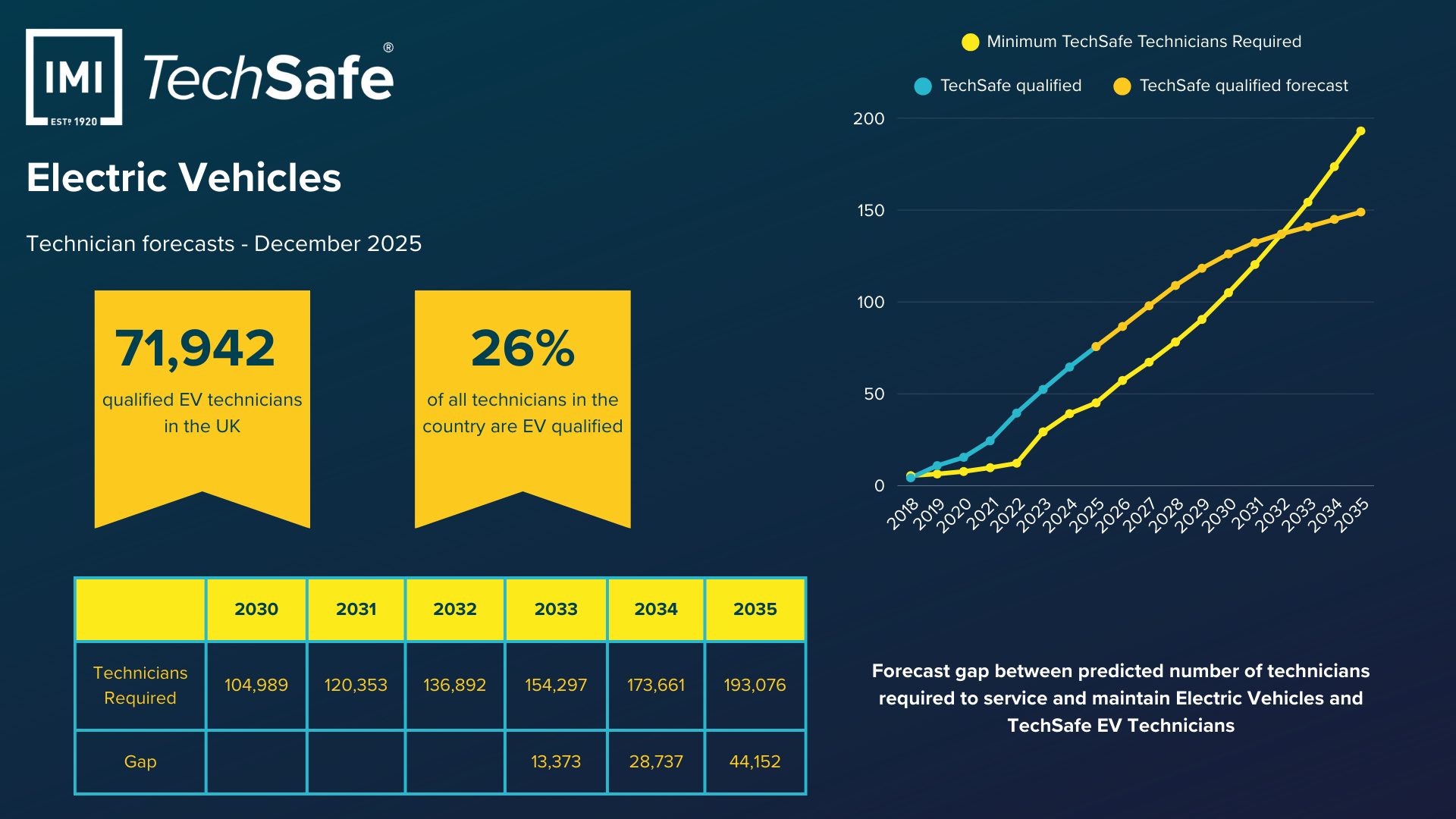
In Q3 2025, 2,613 technicians gained EV certification, bringing the total to 71,942 EV-qualified technicians, or 26% of the workforce.
The latest IMI projections show that demand will outpace supply. The number of EV-qualified technicians could reach 193,000 by 2035, but the sector may still face a shortfall of more than 44,000 technicians.
Demand for advanced driver assistance skills is also rising. Only 11,518 technicians hold an ADAS-related qualification, while 27% of UK vehicles include Level 2 driver assistance features.
Recruitment has stabilised, but at a lower level than before 2020.
In the first quarter of the 2025/26 academic year, employers started 4,561 automotive apprenticeships. Starts fell by 6% compared with last year and remain 20–25% below pre-pandemic levels.
Starts fell by 6% year on year and remain 20 to 25% below pre-pandemic levels
Automotive remains a high-volume apprenticeship sector, ranking 11th out of 38 subject areas.
Autocare Technician starts rose by 8%, while Heavy Vehicle Service and Maintenance Technician increased by 5%.
Lift Truck and Powered Access Engineering Technician recorded the fastest growth, with starts rising by 114%, although from a low base.
In contrast, vehicle damage pathways declined, with paint, panel and assessor routes all falling year on year.
Outlook: growth continues, but the skills gap persists
Training supply must expand faster to meet rising demand for advanced vehicle skills.
Automotive training is recovering, but the sector still faces a growing challenge in building the workforce needed for the transition to electric, connected and automated vehicles.
EV qualifications continue to grow, and apprenticeship recruitment has stabilised. However, training volumes remain below the level required to meet future demand.
Expanding advanced training, strengthening apprenticeship recruitment and improving awareness of modern automotive careers will be critical to future workforce supply.
What the full report covers
The full report explores these themes in more depth, including:
- Analysis of qualification and apprenticeship trends
- Insights into EV and ADAS training uptake
- The latest TechSafe workforce projections
- Analysis of apprenticeship pathways and funding patterns
- Evidence on parental perceptions and the skills pipeline
Author: Angela Barnard, Research and Insights Analyst.


The IMI
Share this Page