


Vacancy Tracker - May 2026
 4 minute read time
 Labour Market
Motor trades continues to rank among higher-demand sectors
Motor Trade vacancies fell during May 2026, indicating that recruitment demand weakened more quickly than the wider labour market.
This Vacancy Tracker shows where employers are recruiting, which skills are most in demand, and what the latest vacancy trends mean for the automotive workforce.
At a glance
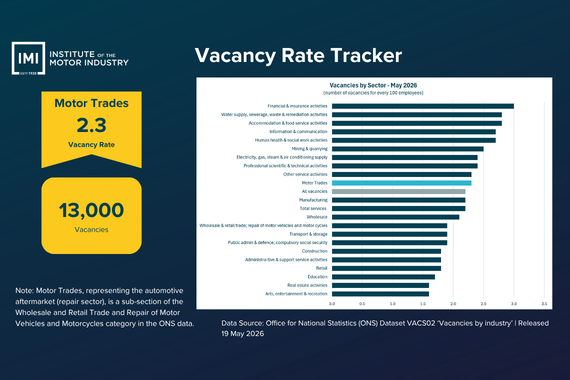
- Vacancy rate: 2.3
- UK industry rank: 9 out of 23
- Approximate open positions: 13,000
- Year-on-year change: -28%
- Two-year change: -41%
Key insight
Motor Trade vacancies fell 7% compared with the previous period and are now 21% below the UK average vacancy rate. Recruitment demand continues to weaken despite a softer labour market overall.
Vacancy levels show softer demand
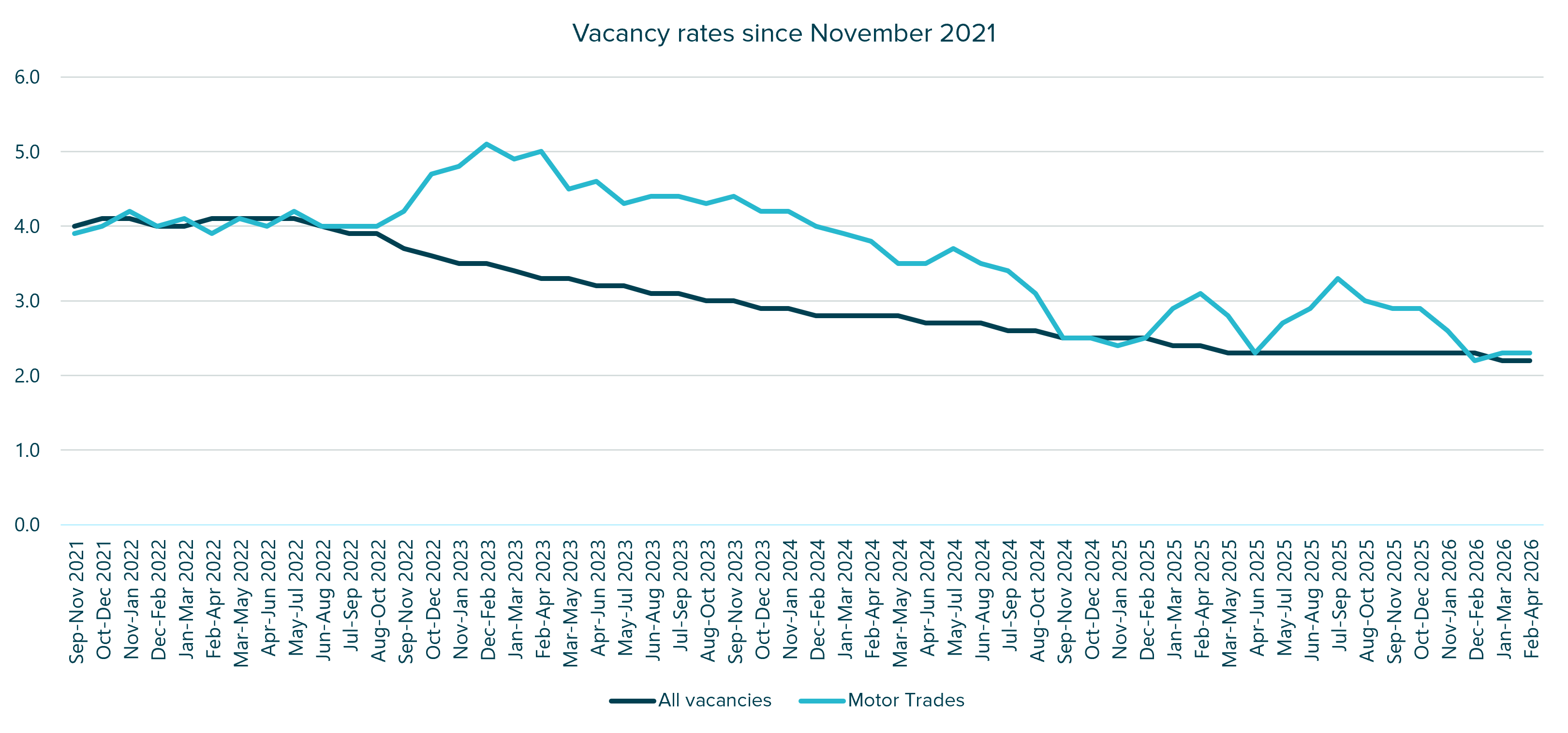
Motor Trade vacancies fell to 13,000 during the latest reporting period, while the vacancy rate stayed stable at 2.3. Vacancy levels are 28% lower than a year ago and 41% below levels recorded two years ago.
The longer-term trend suggests employers remain cautious about recruitment despite continued demand for technical staff.
Vacancy rates stay above many sectors of the economy, but recruitment demand has weakened more quickly than the wider labour market over the past year.
Motor Trades vacancies continues to fall
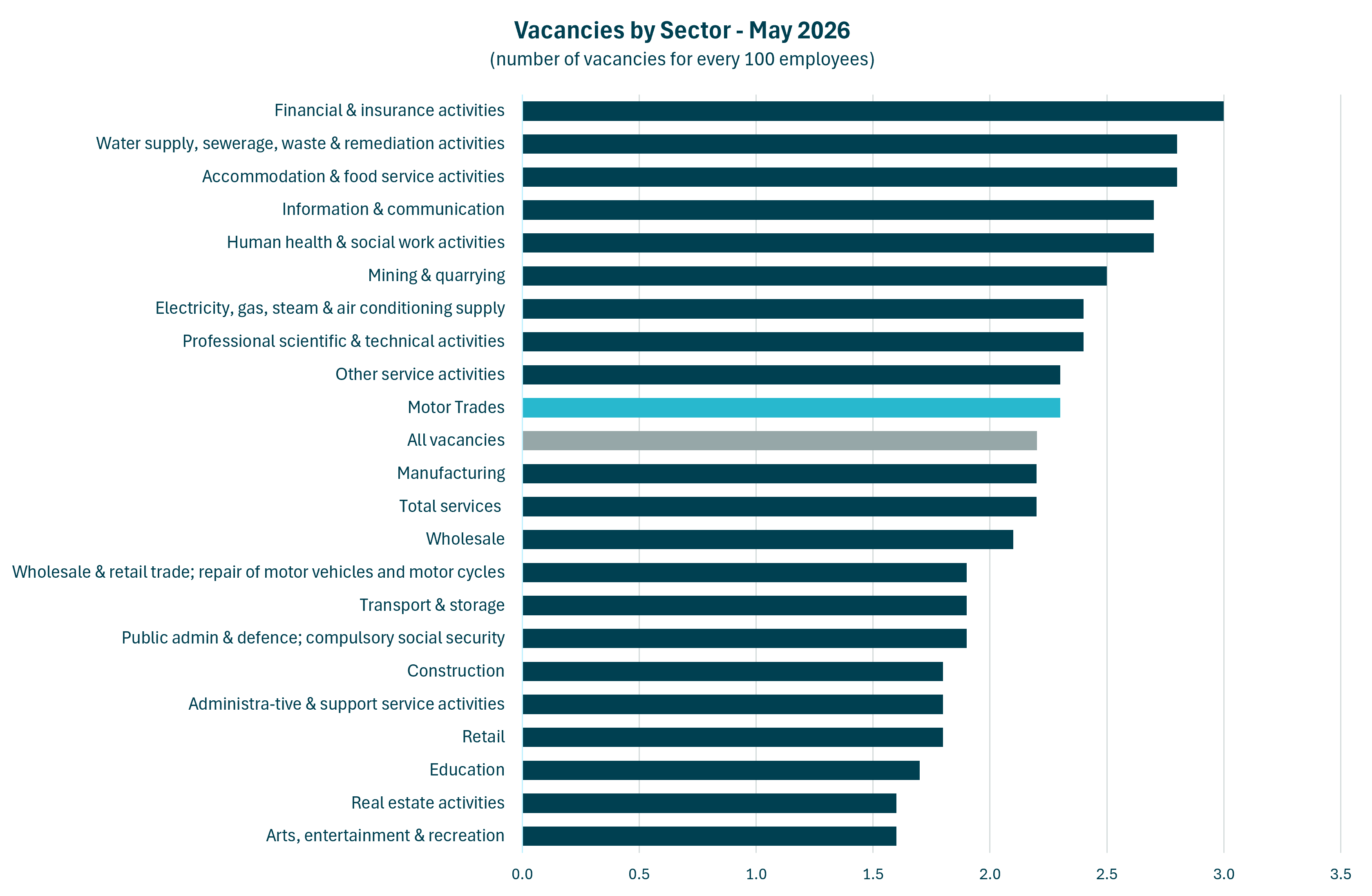
Motor Trades recorded 2.3 vacancies per 100 employees, ranking 9 out of 23 industries.
The sectors with the highest vacancy rates were:
Financial & insurance activities
Water supply, sewerage, waste & remediation activities
- Accommodation & food service activities.
Motor Trades ranked the same as in the previous reporting period, but was three positions higher than December 2025 to February 2026.
Despite weaker recruitment demand, Motor Trades remains one of the higher-ranking sectors for vacancies, placing ninth out of 23 industries. The sector has improved its position compared with earlier periods, rising three places since winter 2025.
This suggests employers have reduced overall hiring activity, while competition for skilled workers remains stronger than in many parts of the economy.
Persistent demand for technicians and specialist workshop staff continues to create workforce pressures across the sector.
Motor Trades remains one of the UK's higher-demand sectors despite a continued fall in vacancy volumes.
Employers continue to recruit despite wider labour market uncertainty
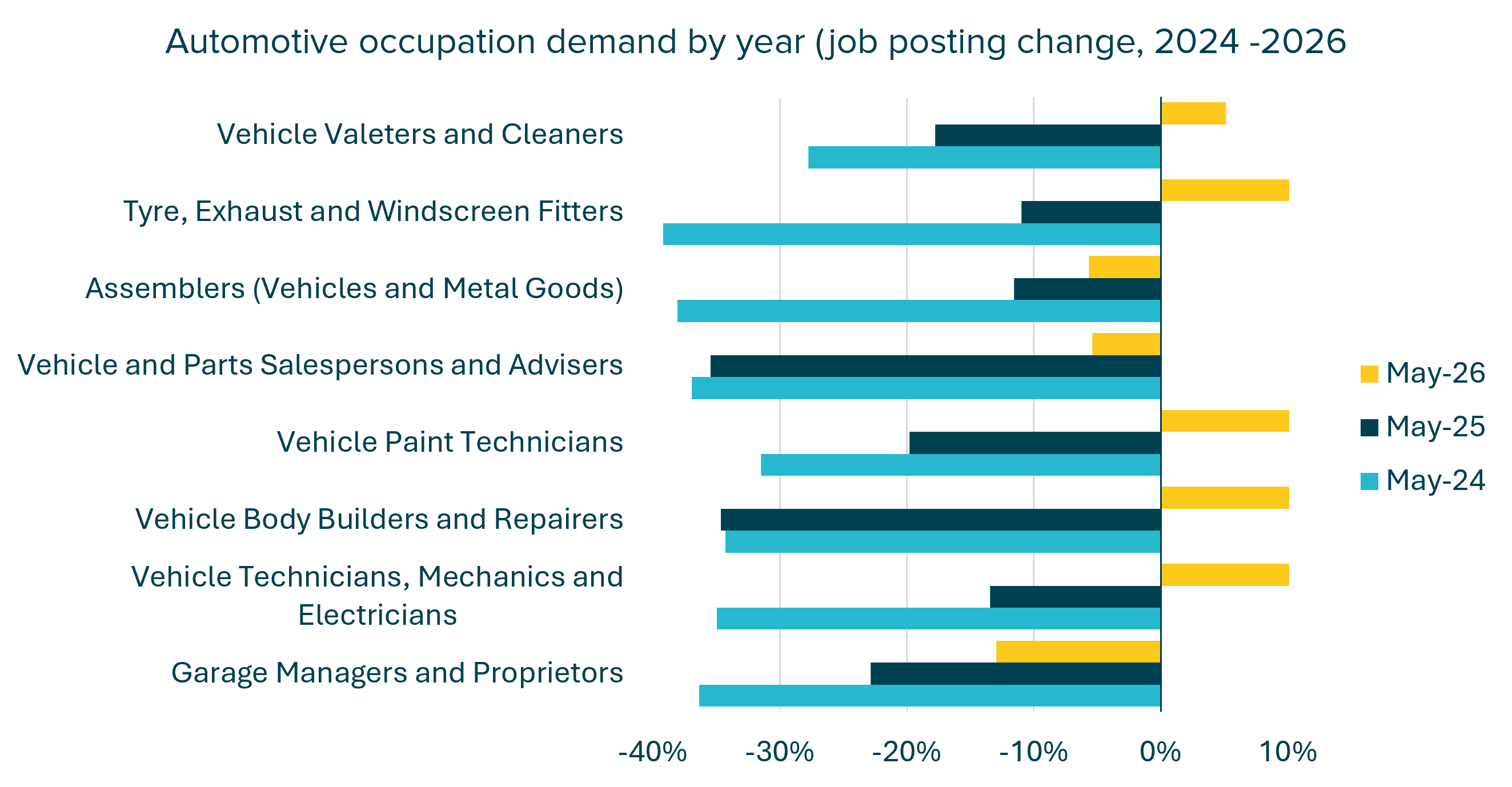
Online job postings increased during the latest period.
Recruitment activity was strongest for Vehicle Technicians, Mechanics and Electricians, the same as previous reporting, accounting for 72% of postings. Compared with May 2025, this is an increase of +17%
Heavy Goods Vehicle (HGV) Technician roles continued to record strong recruitment activity this period, accounting for 9% of postings. Year-on-year growth compared with May 2025 of +17%, reflecting ongoing skills gaps.
In vehicle damage and body repair, Vehicle Body Builders and Repairers and Vehicle Paint Technicians both increased year-on-year, by 24% and 13%, respectively.
This is reflected in demand for Spray painting roles increasing by 3% after two years of decline.
Electric Vehicle (EV) roles have declined by 38% year-on-year, also reflecting a continued decline since May 2023.
Growth in technical roles suggests employers continue to prioritise operational capability. In contrast, the decline in EV-related postings may reflect caution around investment in EV skills.
This is consistent with findings from the IMI Automotive Education Report (Edition 16), the EV TechSafe Technician Forecast (Q4 2025), and the Automotive Labour Market Briefing (March 2026).
Employers continue to prioritise operational capability, while investment in emerging EV skills appears more cautious.
Roles in demand and skills
Most in-demand roles
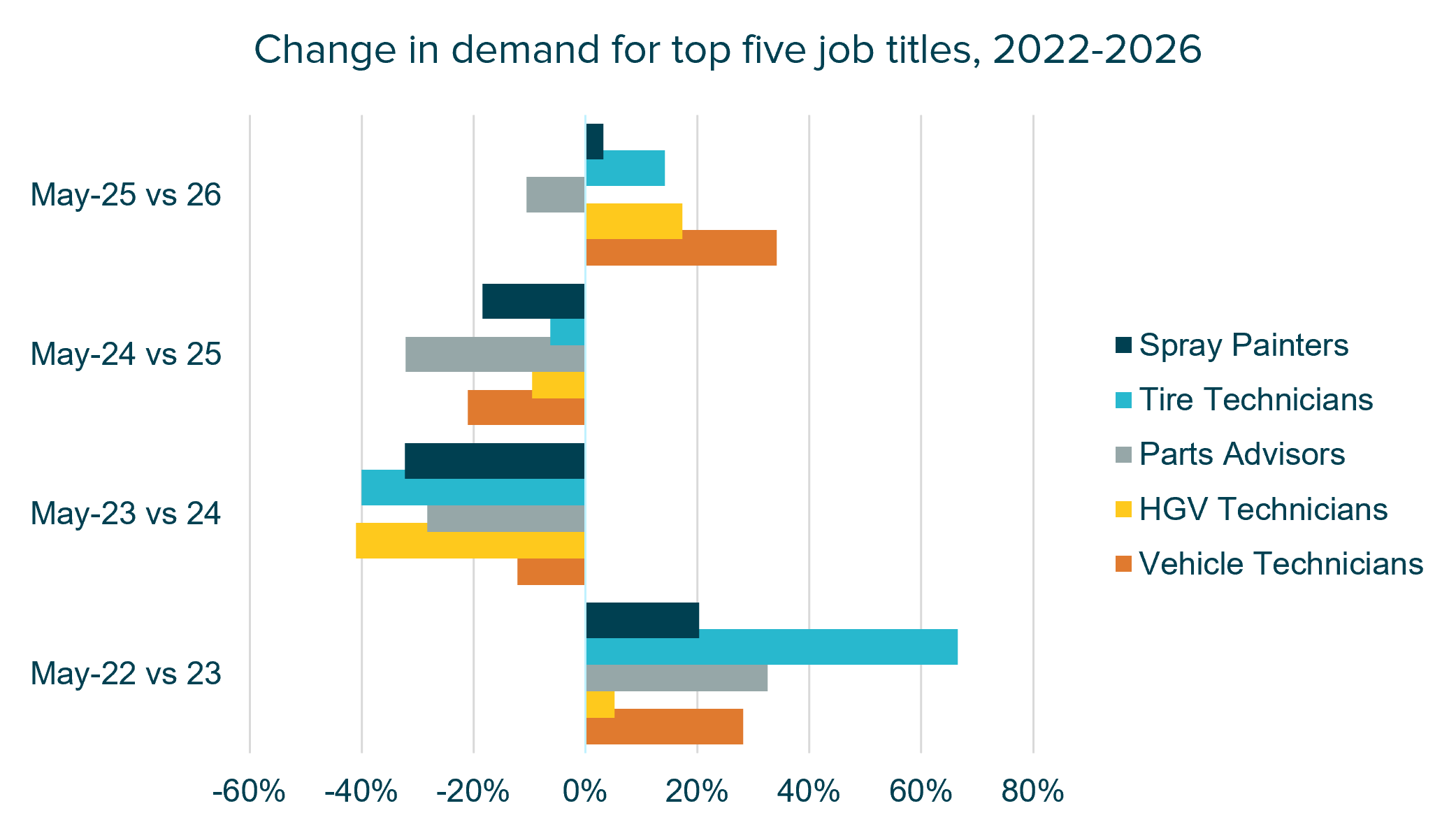
Fastest-growing roles
| Occupation | Change Vs May 2025 |
| Motor Vehicle Technicians | +34% |
| Roadside Technicians | +27% |
| Valeters | +20% |
| HGV Technicians | +17% |
| Tire Technicians | +14% |
Most in-demand skills
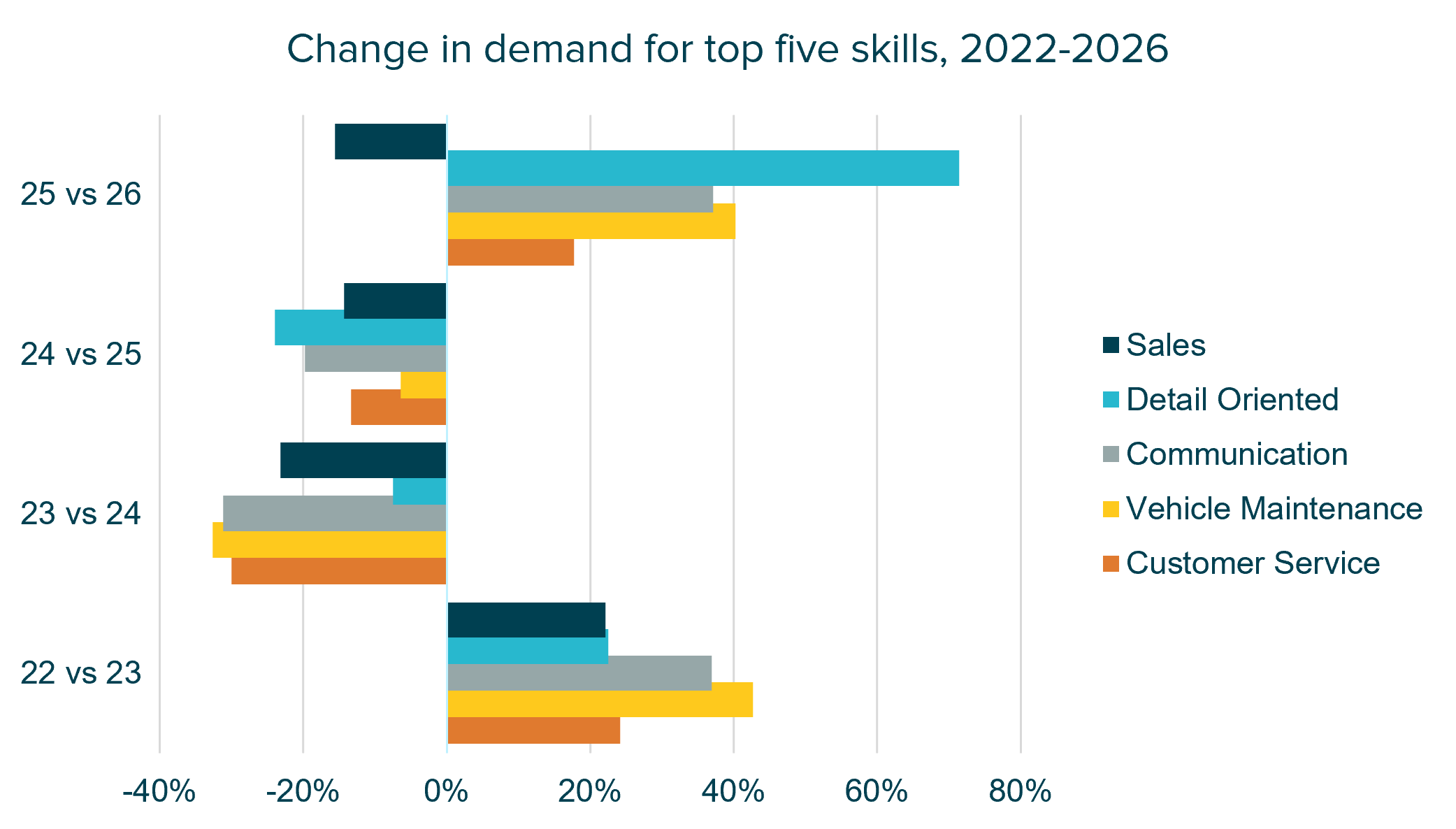
Fastest-growing skills
| Occupation | Change Vs May 2025 |
| Invoicing | +15% |
| Field Service Management | +14% |
| Business Development | +13% |
| Numeracy | +12% |
| English Language | +11% |
Workforce insight
Demand stays concentrated in technical and workshop-based roles, stressing the sector's continued need for skilled technicians and diagnostic expertise.
At the same time, growing demand for invoicing, field service management, business development, numeracy and English language skills suggests employers increasingly value commercial and communication capability alongside technical expertise.
The most sought-after employees combine technical expertise with strong commercial and communication skills.
What this means for the industry
Recruitment demand weakened during the latest reporting period, with vacancy levels continuing to fall year-on-year. However, the sector remains one of the UK's higher-ranking industries for vacancies and employers continue to recruit for technical roles.
Demand stays concentrated in vehicle technicians, roadside technicians and HGV technicians, while growth in management, commercial and communication-related skills suggests employers are looking for broader capability alongside technical expertise.
The findings show the continued importance of workforce development, particularly in specialist technical roles where recruitment demand remains strong despite a softer labour market.
Overall assessment
Although vacancy volumes continue to decline, demand for technical and specialist workshop roles stays strong. Employers appear to be recruiting more selectively, focusing on critical operational skills while continuing to face challenges in attracting experienced technical talent.
Data sources
This report combines vacancy data from the Office for National Statistics (ONS) with online job advertisement data from Lightcast.
Vacancy rates represent vacancies per 100 employee jobs. Lightcast data reflects online recruitment activity and may not capture all vacancies.
Author: Angela Barnard, Research and Insights Analyst.


The IMI
Share this Page