


Automotive Labour Market Briefing - March 2026
 9 minute read time
 Labour Market
| Job postings
Labour Market
| Job postings
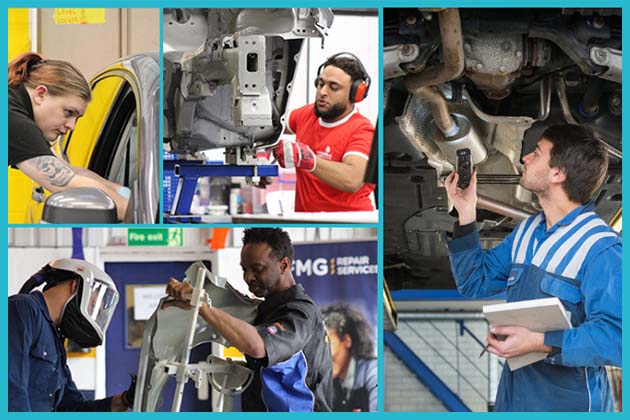
The automotive sector continues to face a structural skills shortage, with demand for experienced technicians exceeding supply.
Vacancy levels have eased, but recruitment pressure remains high, particularly in specialist technical roles.
Around 16,000 roles remain unfilled because the sector is not training enough people to meet demand.
This briefing examines vacancy trends, skills shortages and recruitment patterns across technical roles.
At a glance
- 16,000 vacancies across the automotive sector
- 2.7% vacancy rate, above the UK average of 2.3%
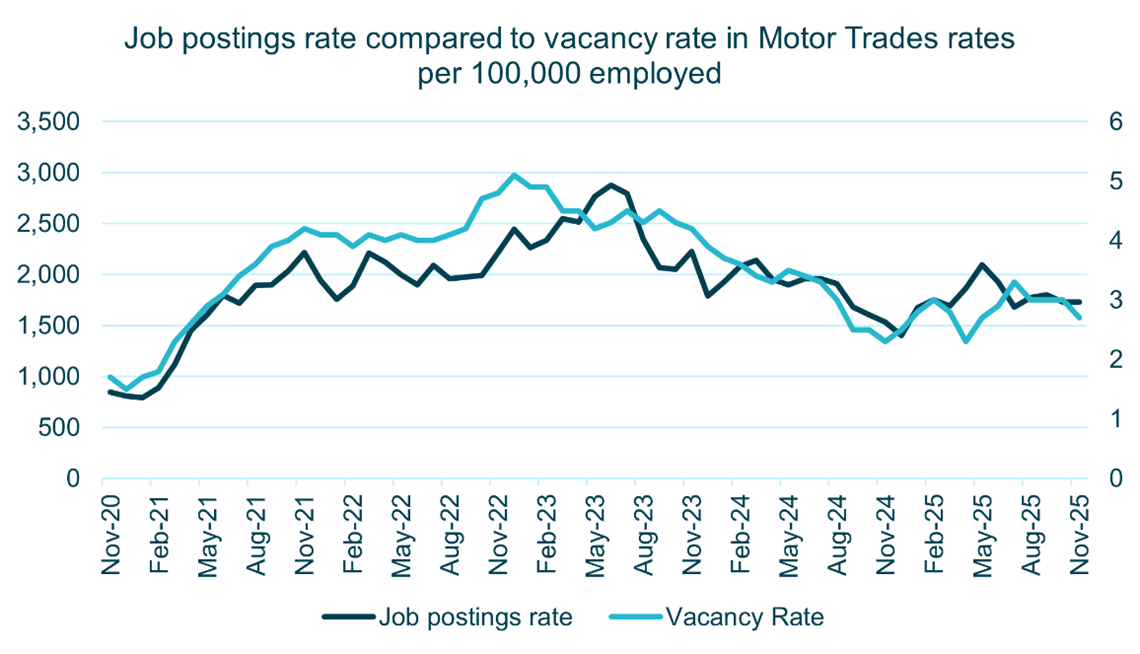
- ~30% fall in vacancies over two years, steeper than the wider economy
- 24% of job postings are for vehicle technicians
- 28% increase in advertised salaries for vehicle paint technicians
- Shortages most acute in body repair, paint and diagnostic roles
Vacancy pressure eases, but demand remains strong
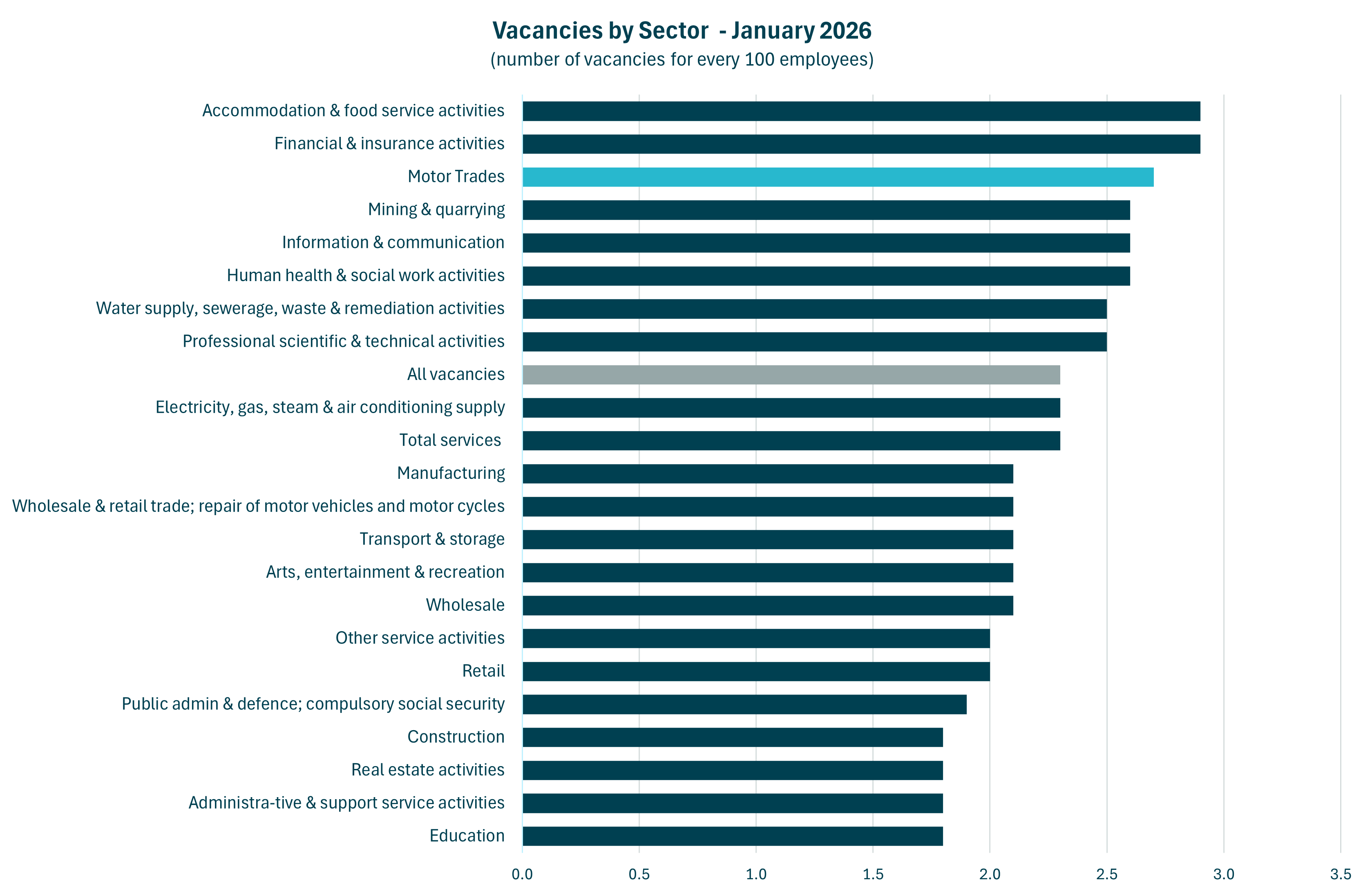
As reported in our January Vacancy Tracker, vacancy levels have fallen. This reflects more selective hiring, not lower demand.
The vacancy rate stands at 2.7%, above the UK average, with around 16,000 roles still unfilled.
Vacancy levels have fallen, but this reflects more selective hiring, not lower demand.
Vacancies have declined by around 30% over two years, compared with 21 to 23% across the wider labour market.
Employers are advertising fewer roles per business but continue to recruit where skills are critical.
Shortages remain, particularly for experienced, workshop-ready technicians, which limits workshop capacity.
Technical roles dominate demand
Demand remains concentrated in technical roles, especially vehicle technicians. These roles account for around 24% of job postings and show little decline.
Employers report difficulty filling roles that require diagnostic capability and hands-on experience, which slows recruitment and reduces productivity.
Demand is strongest in:
- Manufacturing
- Body repair
- Vehicle fitting
Repair and paint roles face the greatest shortages
Skills shortages are most severe in body repair and paint roles. Advertised salaries for vehicle paint technicians have risen by 28% over two years.
Despite this increase, pay remains below market benchmarks, which shows continued recruitment difficulty.
These shortages reduce repair capacity and increase waiting times for customers..
Shortages in repair and paint roles continue to constrain capacity.
Skills supply is not keeping pace with demand
Apprenticeship uptake continues to fall in key pathways, particularly in damage repair.
At the same time, vehicle technology is becoming more complex, increasing the level of skill required.
The gap between training supply and labour market demand continues to widen, increasing pressure on recruitment and business capacity.
Outlook: pressure continues despite lower vacancy levels
The labour market is becoming more balanced, but shortages in specialist roles will persist.
Lower vacancy levels do not reflect lower demand. Employers are adjusting recruitment strategies rather than reducing hiring needs.
Without action to expand training capacity and improve recruitment, skills shortages will continue to constrain productivity and increase costs across the sector.
What the full briefing covers
The full briefing explores these themes in more depth, including:
- Vacancy trends across the automotive sector
- Analysis of in-demand roles and skills shortages
- Salary trends in hard-to-fill occupations
- Insights into recruitment patterns and employer behaviour
- The impact of skills shortages on capacity and costs
ONS vacancy estimates come from the UK Vacancy Survey rolling quarterly series. Online job advert and skills insights come from Lightcast, which analyses job postings to track hiring trends and skill demand across the UK economy.
Author: Angela Barnard, Research and Insights Analyst.


The IMI
Share this Page